1. AWS Kiro: Amazon’s Bold Move in the AI IDE Landscape
Kiro has officially arrived, sending ripples through the developer community. Just yesterday, Amazon unveiled Kiro, its innovative AI-powered Integrated Development Environment (IDE). This marks a significant milestone in the evolution of coding tools.
Built as a direct fork of the widely acclaimed Visual Studio Code, Kiro immediately positions itself as a formidable competitor. It challenges established AI coding assistants such as Cursor, Windsurf, Firebase Studio, and GitHub Copilot.
At the heart of Kiro’s power lies the advanced Claude Sonnet 4.0 AI model. Amazon asserts that Kiro’s unique approach, termed Specification-Driven Development (SDD), enables it to tackle intricate coding challenges with unparalleled efficiency. It aims to outperform many of its rivals.
Perhaps the most compelling aspect of Kiro’s debut is its accessibility. It’s currently free to use, offering developers a powerful, state-of-the-art tool without any initial investment. This strategic move not only democratizes access to cutting-edge AI development but also poses a direct challenge to existing monetization models in the AI IDE market. This makes AWS Kiro The New Cursor Killer a phrase that truly resonates with developers seeking an alternative.
2. Why Kiro Could Be the Next Big Thing in AI Coding
The AI IDE market is in a state of flux. It’s characterized by intense competition and rapid innovation. This dynamic environment sets the stage for Kiro’s potential ascendancy.
2.1 The Tumultuous AI IDE Landscape
The past few months have been a whirlwind of high-stakes acquisitions and strategic maneuvers. Only weeks ago, OpenAI was on the cusp of acquiring Windsurf, another prominent VS Code fork, for an astonishing $3 billion. This deal, however, ultimately collapsed.
This led to a swift and impactful chain of events. Google, recognizing the immense talent and potential within Windsurf, quickly stepped in. They recruited a substantial portion of Windsurf’s top developers in a $2.4 billion acquisition. This move dramatically reshaped the market, illustrating the immense value placed on AI coding expertise.
Simultaneously, agile startups like Cognition, the innovators behind Devin, capitalized on the market upheaval. They acquired Windsurf’s remaining assets, further solidifying their position in the rapidly evolving landscape. This flurry of activity underscores the fervent battle among tech giants and burgeoning startups for developer mindshare. Billions of dollars are at stake in the race to develop and dominate the next generation of AI coding assistants. The competitive pressure is immense. Every new entrant, especially one from a behemoth like Amazon, is scrutinized for its potential to disrupt the status quo. Kiro’s entry into this volatile market highlights Amazon’s ambition to claim a significant share of this lucrative sector.
2.2 Anthropic’s Influence and Cursor’s Challenges
Central to this fierce competition is Anthropic, the powerhouse behind the Claude AI model. Claude underpins many popular AI coding tools, including Cursor. Anthropic’s Cloud Code CLI tool has been a catalyst for explosive growth. Its revenues soared from under $1 billion last year to over $4 billion this year. Amazon, a significant investor in Anthropic with an $8 billion commitment to date, holds a pivotal position in this ecosystem.
However, this intricate relationship presents a double-edged sword for intermediaries like Cursor. While Cursor leverages Claude’s powerful AI, it operates as an intermediary. It necessarily marks up costs to maintain profitability. This monetization strategy recently led to considerable backlash when unexpected pricing changes resulted in surprisingly high bills for some Cursor users. This prompted the company to issue a public apology. Such incidents highlight the inherent tension between providing advanced AI capabilities and managing user expectations regarding cost.
Now, with Amazon’s own AI Ide Kiro launching as a free-to-use, Claude-powered VS Code fork, developers are presented with a compelling alternative. This direct offering from Amazon could potentially provide more AI power at a lower (or no) cost. It directly threatens Cursor’s previously established dominance. The direct competition from a major player offering a free, comparable service could force existing AI IDEs to reconsider their pricing models and value propositions. This makes AWS Kiro a truly disruptive force.
3. Testing Amazon Kiro: A Deep Dive into its SDD Workflow
To truly understand the impact of AWS Kiro, it’s essential to put it through its paces. We’ll examine its core functionalities, particularly its innovative Specification-Driven Development (SDD) workflow.
3.1 Initial Impressions and Early-Stage Considerations
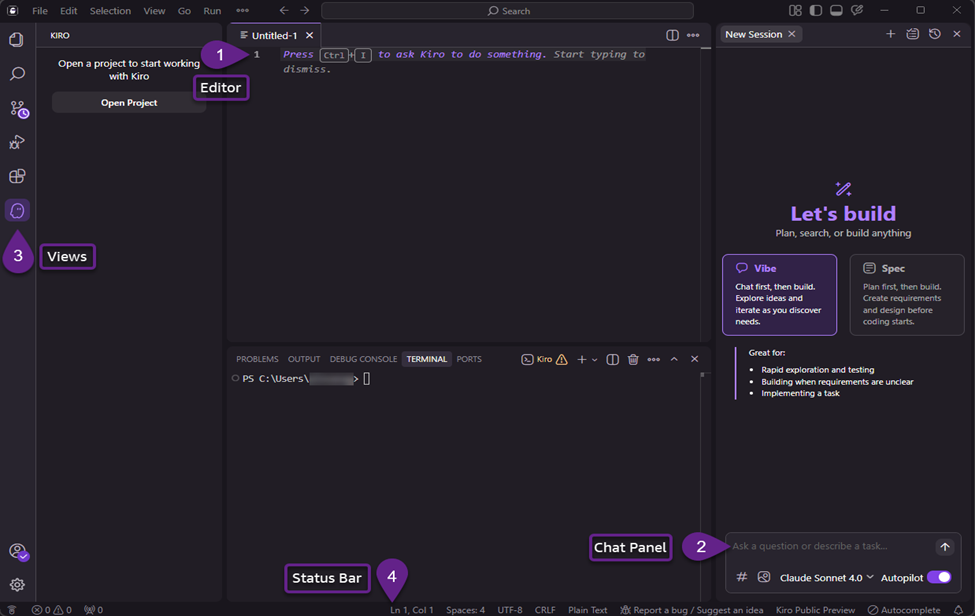
Upon diving into Kiro, the first impression is one of familiarity and cleanliness. The user interface remains remarkably true to the familiar VS Code layout. This is a significant advantage for developers already accustomed to the environment. It minimizes the learning curve and allows users to quickly become productive.
However, as is often the case with early releases, the experience occasionally felt slightly sluggish. Some expected features, such as chat checkpoints, were notably absent. There were also intermittent delays caused by occasional server overloads. These minor hiccups are typical for a product in its preview phase and are likely to be addressed as Kiro matures. Despite these early-stage quirks, the core functionality and the promise of its unique workflow remained evident.
3.2 Understanding Specification-Driven Development (SDD)
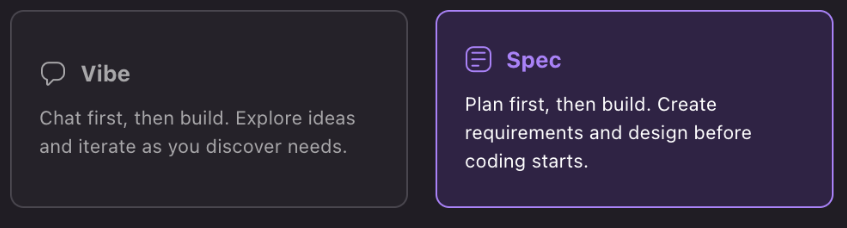
The true differentiator for AWS Kiro is its Specification-Driven Development (SDD) workflow. This approach stands in stark contrast to many other AI coding tools that often jump directly to code generation. This can sometimes lead to less optimal or poorly structured output. Kiro, instead, promotes a more deliberate and structured development process, emphasizing meticulous planning and clear specification.
This structured method involves three key documents:
requirements.md: This document is where user stories and acceptance criteria are meticulously defined. It ensures a clear understanding of what the software needs to achieve from a user’s perspective, setting the foundation for the entire development process.design.md: Following the requirements, this document details the implementation plans. It covers essential aspects such as the component structure, the proposed testing strategy, and how potential errors will be handled. This step is crucial for establishing a robust and maintainable architecture.tasks.md: This final document breaks down the development process into granular tasks. These tasks then serve as explicit guides for the AI to generate code, create comprehensive documentation, and develop appropriate tests. This ensures a step-by-step, guided approach to development.
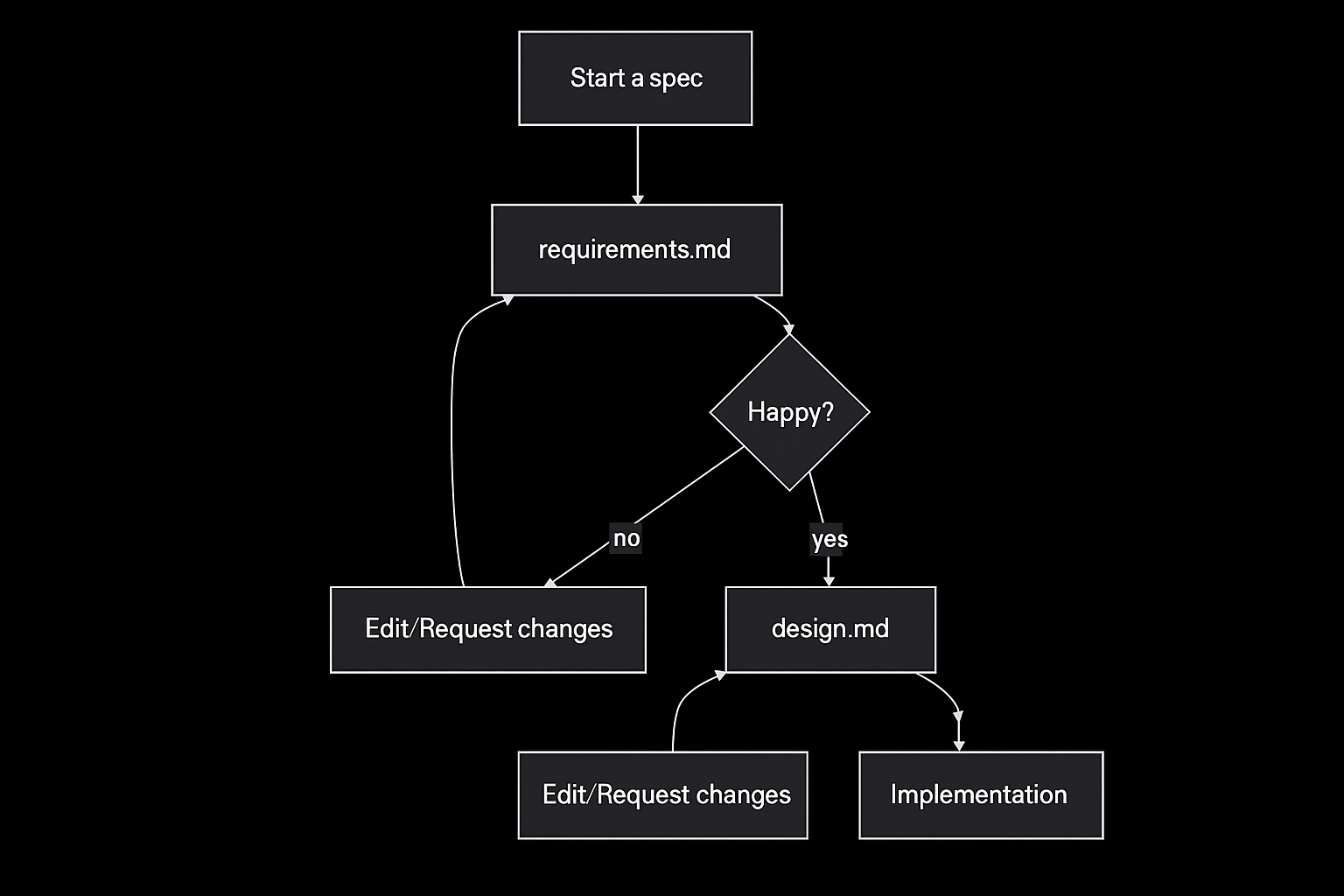
While this slower, more deliberate method might initially feel cumbersome for solo developers working on small, isolated scripts, its benefits become overwhelmingly clear in larger, more complex scenarios. For enterprise projects or development teams collaborating on extensive codebases, SDD promotes code quality, clarity, and maintainability – attributes that are absolutely essential for long-term project success and reduced technical debt. Kiro’s commitment to this disciplined approach sets it apart as an AI IDE designed for robust, production-ready software.
4. Key Features and Future Potential of Kiro AWS
AWS Kiro is not just another AI IDE; it brings a suite of powerful features designed to streamline the development workflow and enhance code quality. These features position Kiro as a significant contender in the market:
- Specs-first development: As detailed earlier, this core principle minimizes guesswork and reduces the need for constant, messy prompt tweaks. By clearly defining requirements and design upfront, developers and the AI work with a shared, precise understanding of the desired outcome, leading to more accurate and efficient code generation.
- Agentic AI capabilities: Kiro’s AI is not merely a suggestion engine. It possesses agentic capabilities, meaning it can autonomously generate code, produce comprehensive documentation, create robust tests, and even draft bug reports based on the defined specifications. This level of autonomy can dramatically accelerate development cycles and free developers to focus on higher-level architectural decisions.
- Multimodal input support: Kiro understands context beyond just text. It supports multimodal input, allowing developers to provide richer context through diagrams, code diffs, and other visual or structured information. This holistic understanding enables the AI to generate more accurate and contextually relevant code.
- Hooks and integrations: Kiro is designed to fit seamlessly into existing development pipelines. It offers hooks and integrations for automated workflows, which can be triggered by specific events, such as file changes. This automation capability is invaluable for continuous integration and continuous deployment (CI/CD) practices.
- Planned support for multiple AI models: While currently powered by Claude Sonnet 4.0, Amazon has indicated plans to expand Kiro’s support for multiple AI models. This foresight ensures future flexibility and allows Kiro to adapt to advancements in AI technology, potentially offering developers choices based on their specific needs and preferences.
Looking ahead, Amazon plans to deeply integrate Kiro into its extensive AWS tools and workflows. This strategic integration will make Kiro particularly attractive for enterprise environments where maintainability, scalability, and automation are paramount. For organizations already invested in the AWS ecosystem, Kiro could become the default choice for AI-driven development, further solidifying its position as a Cursor Killer.
5. The Competitive AI IDE Landscape: Where Kiro Stands
AWS Kiro enters a fiercely competitive landscape, where several established players and innovative startups vie for developer attention. Understanding this ecosystem is crucial to appreciating Kiro’s potential impact.
- Cursor: Powered by Claude, Cursor has been a prominent player but has recently faced challenges related to its pricing model and subsequent erosion of user trust. This vulnerability creates a significant opportunity for Kiro, especially given its free-to-use model.
- Windsurf: The tumultuous acquisition saga surrounding Windsurf, involving both OpenAI and Google, perfectly illustrates the market’s volatility and the high stakes involved in AI IDE development. Its turbulent journey highlights the demand for robust and reliable alternatives.
- Giants like GitHub Copilot, Firebase Studio, and Vercel AI: These major players offer their own AI coding assistants, often integrated within broader developer ecosystems. GitHub Copilot, in particular, has a large user base due to its seamless integration with GitHub. Kiro must demonstrate superior features or a distinct value proposition to attract users from these well-entrenched services.
The crucial dynamic here is Anthropic’s Claude AI model. As Claude powers many of the leading AI IDEs, the need for intermediaries to monetize access to this powerful AI has created a unique market opportunity. AWS, by leveraging its deep pockets and its investment in Anthropic, is uniquely positioned to challenge the market by offering Kiro as a cost-effective, enterprise-ready IDE. This direct-to-developer approach, coupled with its focus on structured development, gives Kiro a distinct edge in a crowded market, further cementing its identity as a potential Cursor Killer.
6. Final Verdict: Is Kiro AWS Truly the “Cursor Killer”?
The launch of AWS Kiro at no initial cost, coupled with its innovative specification-driven workflow, undoubtedly positions it as a compelling new entrant in the AI IDE space. While it is still in its preview phase, exhibiting some early-stage bugs and lacking certain features, Kiro’s disciplined approach to development holds significant promise.
Kiro’s focus on generating production-quality code through its structured SDD workflow may resonate particularly well with developers and teams who prioritize maintainability, clarity, and long-term project success over merely quick code snippets. For enterprises and large-scale projects, the emphasis on robust design and detailed specifications can significantly reduce errors and improve collaboration, making Kiro an attractive proposition.
Whether Kiro will genuinely dethrone Cursor and other established AI IDEs remains to be seen. Its ultimate success will hinge on several critical factors:
- Future performance enhancements: Addressing the current minor sluggishness and optimizing overall performance will be crucial for widespread adoption.
- Model variety: While Claude Sonnet 4.0 is powerful, expanding support for other leading AI models could broaden its appeal and allow developers to choose the best fit for their specific needs.
- Pricing structure post-preview: Once Amazon introduces paid tiers, the pricing model will be a decisive factor in its competitiveness. A transparent, value-driven pricing strategy will be essential to retain and attract users who have become accustomed to its current free offering.
For now, however, Amazon’s Kiro stands as an incredibly exciting and noteworthy AI IDE that developers, especially those focused on structured and enterprise-level development, should absolutely not ignore. It represents a significant step forward in making advanced AI coding capabilities more accessible and disciplined. The emergence of AWS Kiro signals a new chapter in the ongoing evolution of development tools.
7. Explore Kiro by Amazon Today!
Ready to experience the future of AI-driven development? Try Kiro by Amazon, the free AI-driven IDE designed to revolutionize the way developers code in 2025. See for yourself how AWS Kiro is poised to redefine productivity and code quality in the modern development landscape.